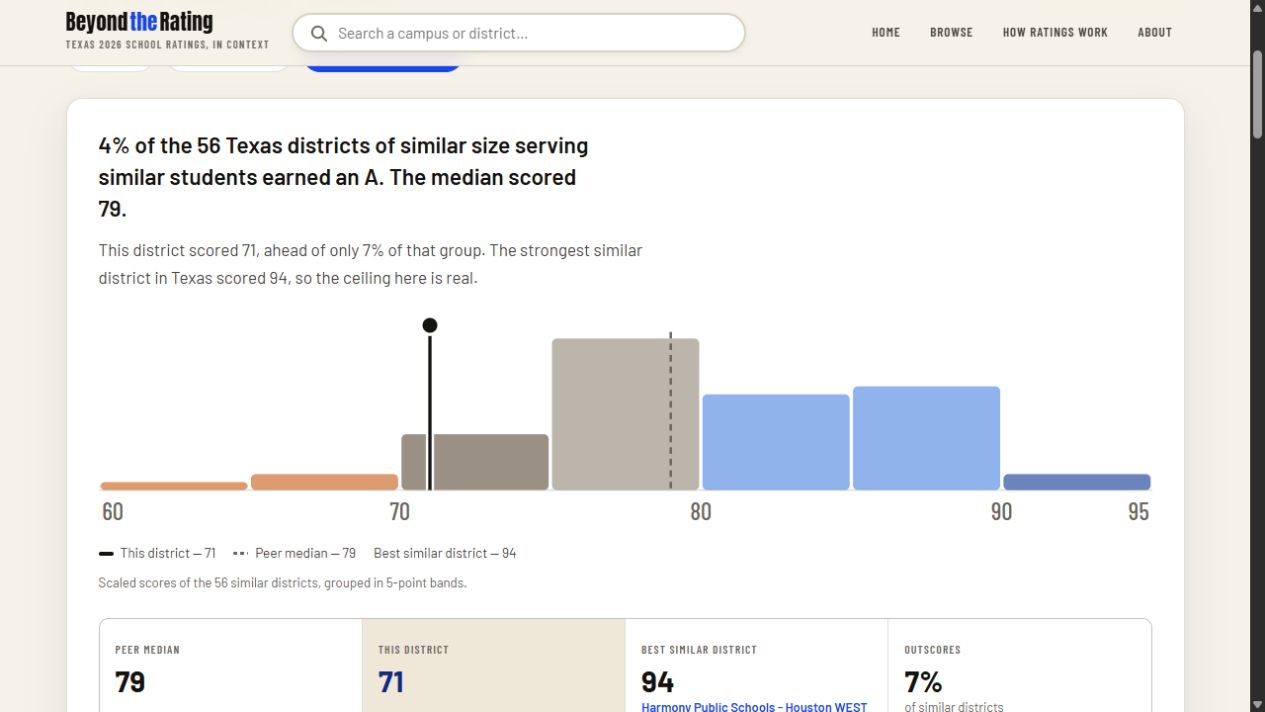
Beyond the Rating
Texas school ratings need context. Look up a campus or district, compare it with schools serving similar students, and see how the overall grade is built.
Tools for making sense of education data,
built around real questions.
01 / SELECTED WORK
A school rating. A funding figure. A writing score.
Each becomes more useful when you can see what’s behind it.
4 projects
Texas school ratings need context. Look up a campus or district, compare it with schools serving similar students, and see how the overall grade is built.
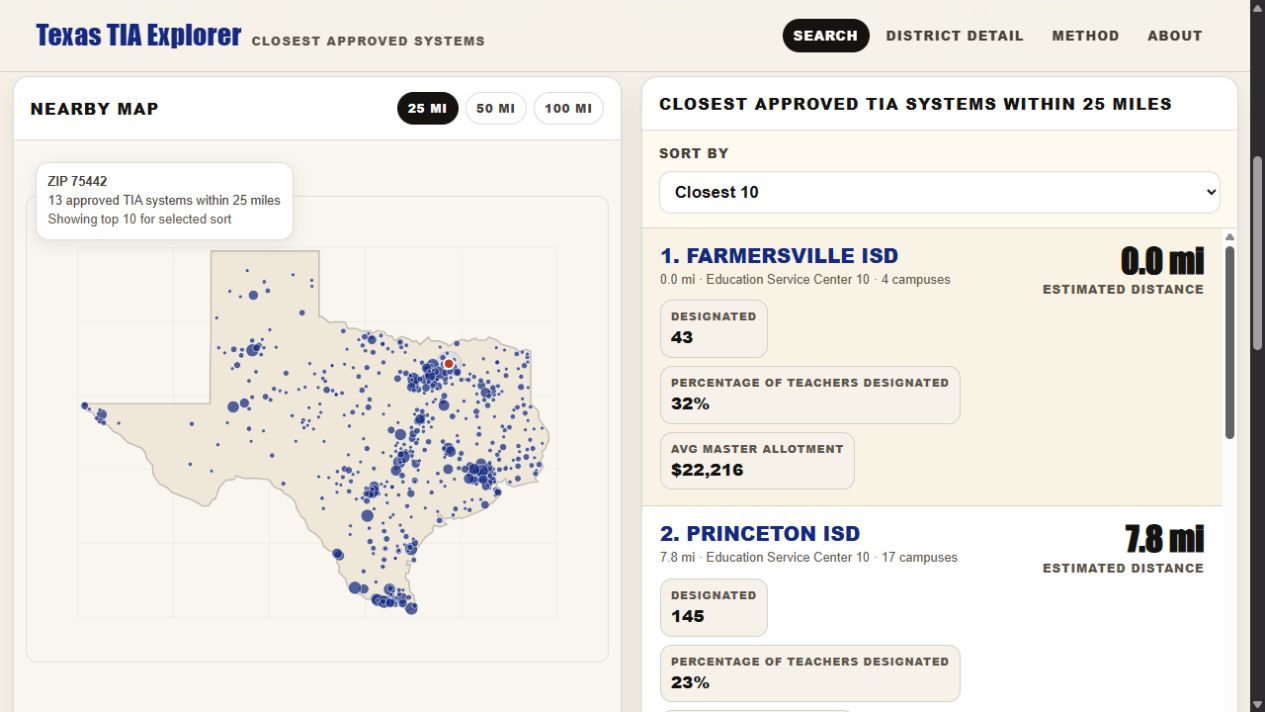
Find nearby approved Teacher Incentive Allotment systems. Search by ZIP code or district and compare public designation and allotment data.
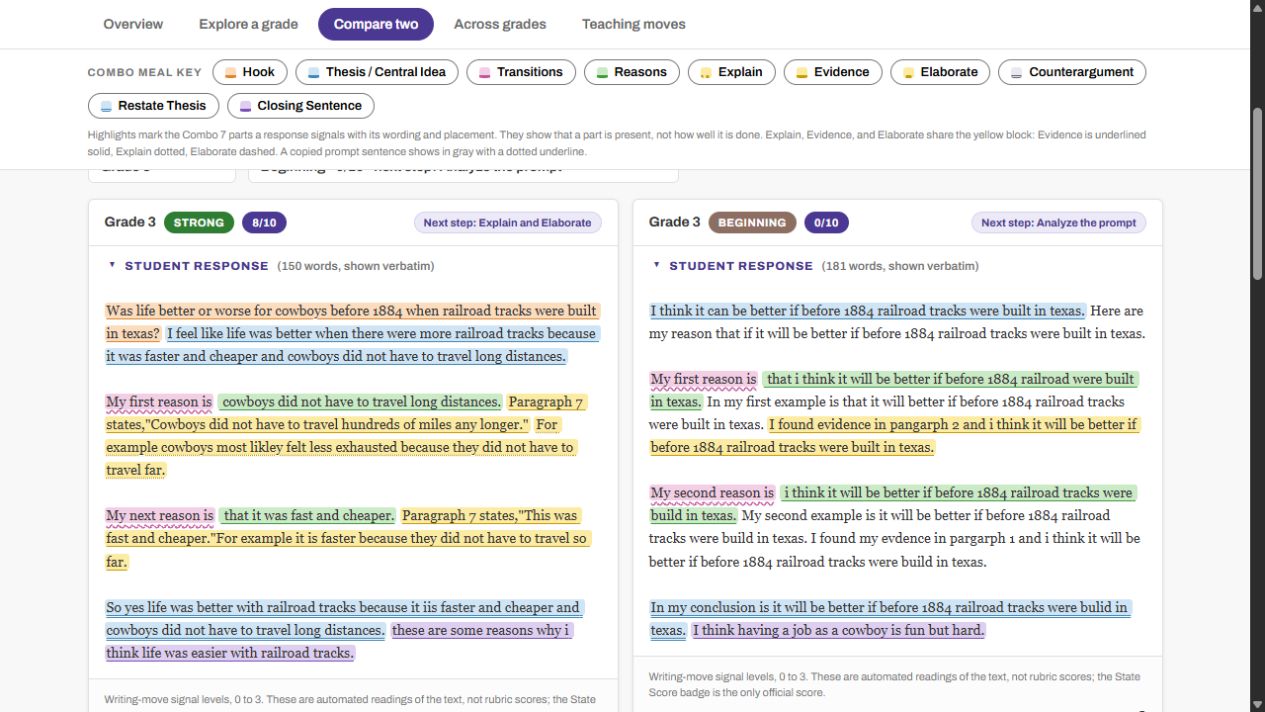
Make the differences between writing scores visible. Compare anonymized student responses, examine writing moves, and connect what you notice to what to teach next.
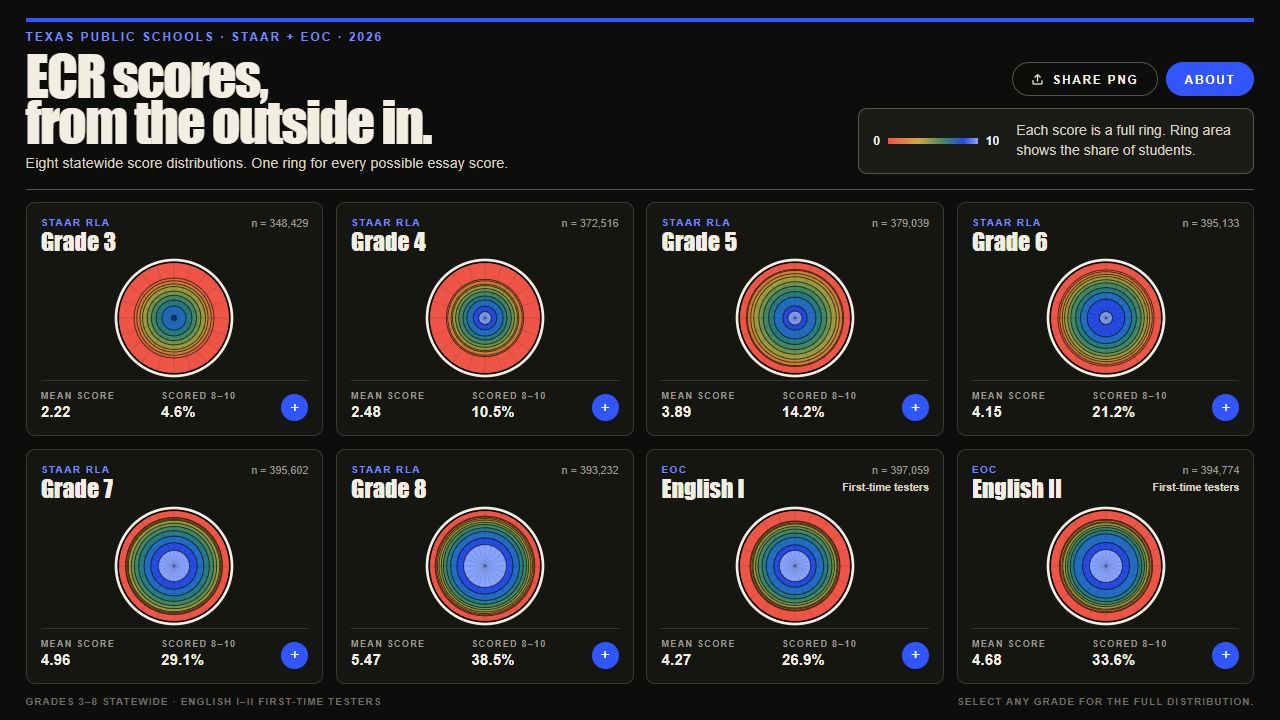
Eight statewide essay-score distributions, read from the edge inward. Explore a grade, inspect the numbers behind the rings, and export a view to share.
02 / FIELD NOTES
Questions from the work, decisions worth explaining, and things still taking shape.
Cassie Kozyrkov argues that judgment is the last skill standing. I think she's right, and I'd add one thing she leaves on the table.
· 5 min read
Read the note →03 / RECENT BOOK
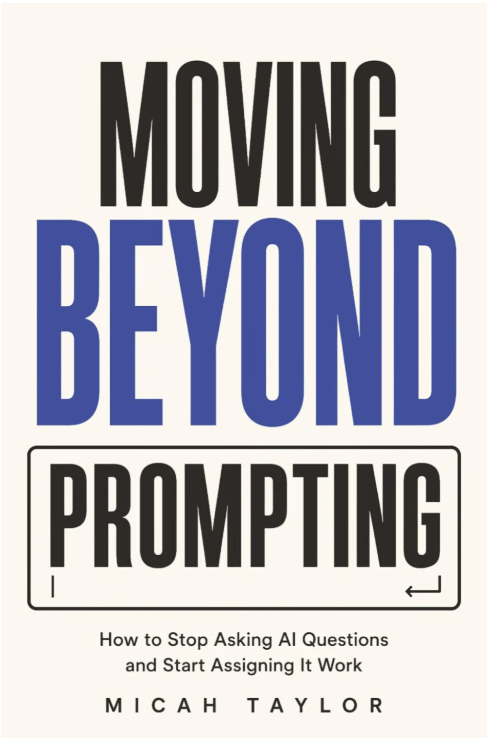
Paperback · 2026 · ISBN 9798189673832
PUBLISHED WORK
Prompting is the floor. This book is about the ceiling.
How to Stop Asking AI Questions and Start Assigning It Work
In August 2023, I asked an AI for twenty dinner ideas my picky eaters might tolerate. Three years later, I was reviewing overnight reports from an AI agent running on a secondhand server in my closet.
So I exported every conversation I had ever had with an AI—16,366 prompts across ChatGPT, Claude, Gemini, and an agent of my own—and analyzed them to find out what had actually changed.
It wasn’t better prompting. What changed was everything around the prompt: what I handed the machine, what I stopped asking it, and what I started assigning it instead. The book follows that progression through four stages.
Notes from the margins
A running set of notes on Jensen Huang, Nvidia, and the operating ideas behind the company’s rise. I’m most interested in the moments where technology changes the shape of a market—and where strong judgment still matters.
“Parallel computing divides a big problem into smaller pieces, then solves them all at once.”p. 96
As an Amazon Associate I earn from qualifying purchases.
THREE IDEAS I’M CARRYING FORWARD
CUDA begins as a reclassification move: gaming hardware becomes scientific infrastructure. The important shift is not only better chips; it is making the same capability useful to people with a different class of problem.
Start with the theoretical minimum time if everything went perfectly, then work backward toward reality. The idea separates physical limits from delay created by queues, priorities, and bureaucracy.
Neural networks can learn useful behavior and outperform people in narrow domains while remaining opaque—even to their creators. Performance is evidence of capability, but not necessarily understanding.
Updated periodically from my reading log. This entry draws from notes recorded August 30–September 8, 2026.
05 / BEHIND THE WORK
I’m Micah Taylor, an educator in North Texas. My work is in assessment and accountability: asking whether something is working and bringing evidence to the answer.
These projects apply that habit to public data, interactive tools, and questions worth a closer look. The work comes first here. You can explore it, inspect its sources, and decide what is useful in your own context.